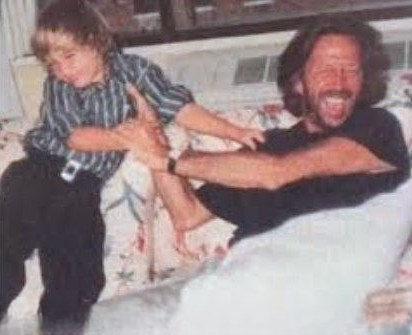
By that point, Eric Clapton had endured more than most could ever imagine. He had battled heroin addiction, teetered on the edge of self-destruction with alcohol, and survived the deaths of peers like Jimi Hendrix, Duane Allman, and Stevie Ray Vaughan—each claimed by their own struggles and genius. Yet Clapton endured. In 1987, he achieved sobriety, a turning point made even more meaningful by the arrival of his son, Conor, the year before.
Conor, born in 1986 to Italian actress Lori Del Santo, became the reason Clapton chose life over despair. Though Clapton and Del Santo were no longer a couple, their shared devotion to Conor created a strong, unbreakable connection. For Clapton, who had spent years trapped by addiction and regret, Conor’s arrival was a lifeline—a purpose, a chance at redemption.
On that tragic March morning, Clapton planned a simple day with his four-year-old son: a trip to the Bronx Zoo. Conor was at his mother’s apartment on the 53rd floor of a Manhattan high-rise, waiting eagerly for his father. Unbeknownst to anyone, a window had been opened by maintenance workers cleaning the building’s exterior. Full of energy and excitement, Conor ran through the apartment, unaware the glass was gone—and in a single instant, he fell.
Fifty-three stories.
When Clapton arrived, he was met with a scene from a nightmare: emergency sirens, paramedics, police, and neighbors frozen in disbelief. His son was gone.
Grief is a force unlike any other. Losing a child is not only losing a loved one—it is losing all the moments you were meant to share: birthdays, laughter, hugs, “I love yous,” erased in an instant. For Clapton, music had always been a refuge, a way to transform pain into something beautiful. But after Conor’s death, even that solace seemed out of reach. His guitars remained untouched, his home silent, mirroring the emptiness in his heart.
Yet grief finds its own voice. Slowly, Clapton returned to his guitar—not to forget, but because music alone could carry the weight of his sorrow. From this darkness, “Tears in Heaven” emerged, co-written with lyricist Will Jennings. The song became a universal anthem for mourning, capturing the heartbreak of losing someone irreplaceable.
“Would you know my name if I saw you in heaven?
Would it be the same if I saw you in heaven?”
Every line transformed raw grief into melody. It wasn’t merely a song about death; it was a father’s desperate question: would my child remember me if we met again?
For Clapton, that grief continues to inspire. It lives in his music, the foundation he built, and the life he leads with humility and intention. Through his suffering, he has given others permission to grieve, to feel, and to heal. “Tears in Heaven” is not just about Conor—it is about every loss too heavy for words.
Conor’s brief life lasted only four years, but his legacy extends far beyond. He transformed his father, and through him, touched the world of music. The tragedy that ended his life also gave birth to one of the most enduring songs ever written—a reminder that love, even when cut short, endures forever.