Given the current global climate and the unmistakable rise in political tension, it’s no surprise that fear of war has quietly settled into public consciousness. For many people, it lingers in the background—rarely spoken aloud, but always present.
Part of Donald Trump’s reelection messaging emphasized keeping U.S. troops out of foreign conflicts. Yet a series of aggressive geopolitical moves has left many observers uneasy. Actions tied to Venezuela, heightened rhetoric surrounding Iran, and repeated public insistence that the United States should acquire Greenland have contributed to a growing sense that stability on the world stage is far more fragile than it appears.
The deepest concern, of course, is the possibility of World War III—a conflict so vast and destructive that it could permanently alter life on Earth. Optimists argue that countless safeguards, treaties, and rational actors stand between humanity and a nuclear catastrophe. More pragmatic voices counter that the past year has brought the world closer to escalation, not farther from it.
With unpredictable leadership, strained alliances, and the familiar drivers of conflict—ego, pride, and the pursuit of dominance—many fear that a serious miscalculation could ignite something irreversible. Against this backdrop, public anxiety has shifted from abstract dread to unsettling “what if” scenarios.
Adding to those fears, nuclear historian Alex Wellerstein of Stevens Institute of Technology has previously discussed which U.S. locations could be most vulnerable in the event of a nuclear strike. Speaking publicly in 2025, he explained that targets would vary depending on the attacker’s goals.
“If the adversary is Russia and their goal is to disable U.S. retaliation,” he noted, “command centers and intercontinental ballistic missile sites would likely be hit first. If the attacker were a rogue actor, symbolic or densely populated areas might be targeted instead.”
That distinction places several lesser-known cities in an uncomfortable spotlight.
Great Falls, with just over 60,000 residents, appears on such lists because of its proximity to Malmstrom Air Force Base, which controls hundreds of missile silos. Though small, its strategic value is enormous.
The same logic applies to Cheyenne, home to Francis E. Warren Air Force Base, a major control center for U.S. nuclear missile operations. Its population may be modest, but its military importance makes it a potential target.
In Utah, both Ogden and Clearfield sit near Hill Air Force Base, one of the nation’s key nuclear weapons facilities. Together, their combined population barely exceeds 120,000, yet their location places them near critical infrastructure.
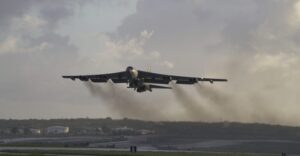
Further south, Shreveport lies just miles from Barksdale Air Force Base, home to B-52 bombers capable of delivering nuclear payloads. Any direct strike on the base would almost certainly devastate the surrounding civilian population.
On the Pacific front, Honolulu remains strategically vital due to its concentration of naval and air forces. The memory of Pearl Harbor continues to shape how military planners view the island’s vulnerability.
In the heartland, Omaha sits near Offutt Air Force Base, a central hub for U.S. nuclear command operations. Nearby Colorado Springs hosts NORAD, the command responsible for defending North American airspace, making it another high-value target.
The Southwest is not exempt. Albuquerque is home to Kirtland Air Force Base, which houses one of the largest nuclear arsenals in North America.
Some targets are obvious. Washington, D.C., as the seat of government, represents political power itself. Seattle, near Naval Base Kitsap and a major global port, holds both military and economic significance.
Other cities appear on vulnerability lists not because of military installations, but because of population density and influence. These include San Francisco, Houston, Chicago, Los Angeles, and New York City—urban centers whose destruction would ripple across the global economy and psyche.
None of this guarantees that catastrophe is imminent. But the discussion itself reflects how fragile international stability feels to many people today. Whether these fears are justified or amplified by uncertainty, they reveal a collective unease about leadership, diplomacy, and humanity’s ability to restrain its most destructive tools.
Do you believe the world is edging closer to a global conflict, or do you trust that deterrence and diplomacy will prevail?